
Hypothyroidism vs Hyperthyroidism: Symptoms, Differences, and Treatment
Hypothyroidism vs hyperthyroidism: learn the symptoms, causes, tests and treatment options for each, and when to seek help.
By Nutritionist Vanshika Chhajer (MSc Clinical Nutrition)
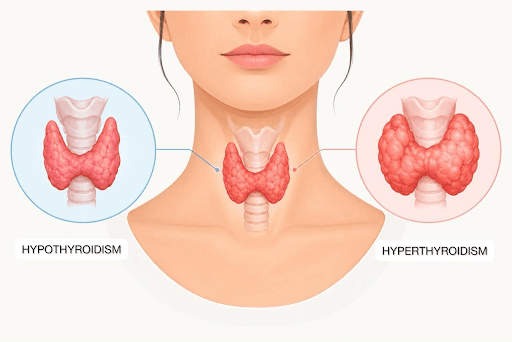
Nutrition and lifestyle habits can support thyroid health, but thyroid disorders require appropriate medical diagnosis and treatment.
Unexplained weight changes, persistent tiredness, hair fall and changes in heart rate can sometimes be associated with thyroid problems. Understanding hypothyroidism vs hyperthyroidism can help you recognise the differences between these two conditions.
The thyroid gland is a small, butterfly-shaped gland in the neck that produces hormones responsible for regulating metabolism, energy levels, body temperature and several other functions.
Hypothyroidism occurs when the thyroid produces too little hormone, while hyperthyroidism occurs when it produces too much. Although both affect the same gland, their symptoms, causes and treatments differ.
What Is Hypothyroidism and Hyperthyroidism?
What Is Hypothyroidism?
Hypothyroidism, also known as an underactive thyroid, occurs when the thyroid gland does not produce enough thyroid hormones. This can slow down several body processes.
Common symptoms include fatigue, constipation, dry skin, feeling cold, hair thinning and possible weight gain. Heavy or irregular menstrual periods and fertility difficulties may also occur. Hashimoto's thyroiditis, an autoimmune condition, is a common cause.
What Is Hyperthyroidism?
Hyperthyroidism, also known as an overactive thyroid, occurs when the thyroid produces excess hormones. This can speed up several body processes.
Symptoms may include unexplained weight loss, sweating, anxiety, a racing heartbeat, heat sensitivity, hand tremors and frequent bowel movements. Graves' disease is a common cause.
Hypothyroidism vs Hyperthyroidism: Key Differences
Thyroid activity
- Hypothyroidism
- Underactive
- Hyperthyroidism
- Overactive
Metabolism
- Hypothyroidism
- Generally slower
- Hyperthyroidism
- Generally faster
Weight changes
- Hypothyroidism
- Weight gain may occur
- Hyperthyroidism
- Weight loss may occur
Energy
- Hypothyroidism
- Fatigue and sluggishness
- Hyperthyroidism
- Restlessness, increased energy or fatigue
Body temperature
- Hypothyroidism
- Feeling cold
- Hyperthyroidism
- Feeling hot
Heart rate
- Hypothyroidism
- May be slower
- Hyperthyroidism
- May be faster or irregular
Digestion
- Hypothyroidism
- Constipation may occur
- Hyperthyroidism
- Frequent bowel movements may occur
Menstrual cycle
- Hypothyroidism
- Heavy or irregular periods may occur
- Hyperthyroidism
- Lighter or irregular periods may occur
Common causes
- Hypothyroidism
- Hashimoto's thyroiditis
- Hyperthyroidism
- Graves' disease
Common treatment
- Hypothyroidism
- Thyroid hormone replacement
- Hyperthyroidism
- Antithyroid medicines or other medical treatments
These are common patterns, not diagnostic rules. Symptoms can overlap, and not everyone experiences all of them.
How to Distinguish Between Hyperthyroidism and Hypothyroidism
Symptoms alone cannot confirm a thyroid disorder. Blood tests help assess thyroid function and identify possible causes.
1. TSH Test
Thyroid-stimulating hormone (TSH) is commonly the first test used to assess thyroid function. In primary hypothyroidism, TSH is usually high. In primary hyperthyroidism, TSH is usually low.
However, TSH results must be interpreted alongside other thyroid tests, symptoms, medications and individual circumstances.
2. Free T4 and T3 Tests
Free T4 measures the available thyroxine hormone in the blood. T3 testing may also be recommended, particularly when hyperthyroidism is suspected. Results are interpreted alongside TSH to understand thyroid function more accurately.
3. Thyroid Antibody Tests
If an autoimmune thyroid condition is suspected, your doctor may recommend thyroid antibody tests to help identify causes such as Hashimoto's thyroiditis or Graves' disease.
A thyroid ultrasound may be recommended if there is a lump, enlargement or another structural concern. It is not necessary for everyone with abnormal thyroid blood tests.
Concerned about your thyroid health? Book a free consultation at Sia Health to discuss your symptoms and understand what nutrition and lifestyle support may be appropriate.
Hypothyroidism vs Hyperthyroidism: Treatment Options
Treatment depends on the underlying cause, severity, symptoms and individual health needs.
Treatment for Hypothyroidism
Levothyroxine is commonly prescribed to replace the thyroid hormone the body is not producing adequately. The dose is individualised, and follow-up blood tests help determine whether adjustments are needed.
Levothyroxine is often taken with water on an empty stomach, 30–60 minutes before breakfast. Calcium and iron supplements can interfere with its absorption and are generally taken at least four hours apart from it. Follow your doctor's specific instructions.
Do not change or stop thyroid medication without medical guidance.
Treatment for Hyperthyroidism
Treatment options may include:
- Antithyroid medicines: Help reduce thyroid hormone production.
- Beta-blockers: May help manage symptoms such as a racing heartbeat and tremors, but do not reduce thyroid hormone production.
- Radioactive iodine therapy: May be recommended for selected patients.
- Surgery: May be appropriate for specific thyroid conditions.
The best option depends on the underlying cause and the person's health needs. Some treatments, including radioactive iodine therapy and certain surgical procedures, may result in hypothyroidism that requires thyroid hormone replacement.
Can Diet and Lifestyle Support Thyroid Health?
A balanced diet and healthy lifestyle support overall wellbeing, but they cannot replace prescribed treatment for thyroid disorders.
1. Eat Balanced Meals
Include protein, fibre, vitamins and minerals through foods such as dal, beans, eggs, dairy products, fish, chicken, vegetables, fruits, whole grains, nuts and seeds, depending on your dietary preferences.
A varied diet supports general health, but no single food can correct an underactive or overactive thyroid.
2. Avoid Excessive Iodine Supplements
Iodine is essential for thyroid function, but excessive intake can worsen thyroid problems in susceptible individuals. Use iodised salt in appropriate amounts and avoid high-dose iodine or kelp supplements unless medically advised.
3. Maintain Medication Consistency
If you take levothyroxine, follow your prescribed timing and discuss how to manage meals, tea, coffee and supplements around your dose. Some foods, drinks and supplements can affect how the medicine is absorbed.
4. Prioritise Sleep and Movement
Maintain a regular sleep routine and choose physical activity suited to your health and fitness level. If you have uncontrolled hyperthyroidism or significant palpitations, seek medical advice before strenuous exercise.
5. Attend Regular Follow-Ups
Take medication as prescribed and complete thyroid blood tests when recommended. If symptoms persist despite thyroid levels being controlled, ask your doctor whether other causes should be investigated.
When Should You See a Doctor?
Seek medical advice if you experience persistent tiredness, unexplained weight changes, hair thinning, constipation, heat or cold sensitivity, menstrual irregularities, neck swelling or a racing heartbeat.
Thyroid assessment is particularly important when planning a pregnancy or during pregnancy, as thyroid hormone requirements and test interpretation may differ.
Seek urgent medical attention for chest pain, fainting, severe breathlessness or a very rapid or irregular heartbeat accompanied by significant symptoms.
Frequently Asked Questions
1. What is the main difference between hypothyroidism and hyperthyroidism?
Hypothyroidism means the thyroid produces too little hormone, while hyperthyroidism means it produces too much. The conditions can affect metabolism, energy, body temperature and heart rate differently.
2. Which is more serious: hypothyroidism or hyperthyroidism?
Neither is always more serious. Both can cause complications if untreated or poorly controlled. The risks depend on the severity, cause, other health conditions and treatment.
3. Can hypothyroidism cause weight gain and hyperthyroidism cause weight loss?
Yes, these weight changes can occur. However, weight changes have many possible causes and cannot confirm a thyroid disorder on their own.
4. Can thyroid problems affect periods and fertility?
Yes. Both conditions can affect menstrual regularity and ovulation. Medical assessment can help determine whether thyroid testing or other investigations are needed.
5. Can diet alone treat thyroid problems?
No. A balanced diet supports general health, but it cannot reliably treat an underactive or overactive thyroid. Follow medical advice and avoid unprescribed thyroid supplements.
6. What are hypothyroidism and hyperthyroidism called in Hindi?
Hypothyroidism can be described as kam sakriya thyroid, meaning an underactive thyroid. Hyperthyroidism means zyada sakriya thyroid, or an overactive thyroid.
Conclusion
Understanding hypothyroidism vs hyperthyroidism, including the comparison of hyperthyroidism vs hypothyroidism, can help you recognise the differences between the two conditions. Hypothyroidism may cause fatigue, constipation and weight gain, while hyperthyroidism may contribute to palpitations, heat sensitivity and weight loss.
However, symptoms alone cannot confirm a diagnosis. Thyroid blood tests, medical evaluation and appropriate follow-up are essential for effective management.
Balanced nutrition, regular movement, adequate sleep and consistent medication habits can support your overall health alongside medical care.
Book a free consultation at Sia Health to discuss your thyroid health concerns and explore personalised nutrition and lifestyle support.
Medical References
- National Institute of Diabetes and Digestive and Kidney Diseases (NIDDK). Hypothyroidism (Underactive Thyroid).
- National Institute of Diabetes and Digestive and Kidney Diseases (NIDDK). Hyperthyroidism (Overactive Thyroid).
- National Institute of Diabetes and Digestive and Kidney Diseases (NIDDK). Thyroid Tests.
- American Thyroid Association (ATA). Hyperthyroidism.
- NHS. Levothyroxine: A medicine for an underactive thyroid.
Disclaimer - This information is provided for educational purposes and should not be construed as medical advice. Please consult with your healthcare practitioners before undertaking any changes in your diet or adding supplements.
Sia Health is a digital clinic for women, offering accessible, personalized, and compassionate health-care solutions - https://www.siahealth.in