
Foods to Avoid with Hypothyroidism: An Indian Diet Guide
Foods to avoid with hypothyroidism, Indian diet tips and levothyroxine timing explained, so you know what you can safely eat.
By Nutritionist Vanshika Chhajer (MSc Clinical Nutrition)
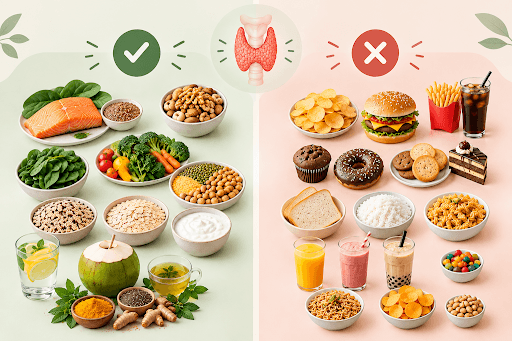
If you have hypothyroidism, you may have come across long lists of foods you should never eat again. From cabbage and cauliflower to soy, wheat and dairy, the restrictions can feel overwhelming, especially when these foods are part of everyday Indian meals.
The good news is that most people with hypothyroidism do not need a highly restrictive diet. The focus should be on balanced meals, adequate nutrients, avoiding excessive iodine intake and taking thyroid medication correctly.
This guide explains foods to avoid with hypothyroidism, what you can safely eat, and how to manage your diet if you have Hashimoto’s disease or take levothyroxine.
What Is Hypothyroidism?
Hypothyroidism occurs when the thyroid gland does not produce enough thyroid hormones. These hormones help regulate metabolism, body temperature, energy levels and digestion.
Common symptoms include fatigue, constipation, dry skin, feeling cold, hair thinning and unexplained weight changes. However, these symptoms can have other causes, so blood tests are important for diagnosis.
Hashimoto’s disease, also called Hashimoto’s thyroiditis, is an autoimmune condition and a common cause of hypothyroidism. Treatment often involves levothyroxine, which replaces the thyroid hormone your body cannot produce in sufficient amounts.
Foods to Avoid with Hypothyroidism (and What to Limit)
There is no universal list of foods that everyone with hypothyroidism must avoid. However, some foods, supplements and eating habits need attention.
1. Excessive Iodine and Iodine Supplements
Iodine is essential for making thyroid hormones, but excessive intake can worsen thyroid dysfunction in susceptible people, including some individuals with Hashimoto’s disease.
Be cautious with:
- Kelp and seaweed supplements, which contain high amounts of iodine.
- High-dose iodine tablets or drops.
- “Thyroid support” supplements containing iodine without a clear medical indication.
Use iodised salt in normal cooking quantities rather than adding extra salt or taking iodine supplements without medical advice. Pregnancy and breastfeeding can change iodine requirements, so seek individual guidance from your healthcare professional.
2. Soy Foods: Soya Chunks, Tofu and Soy Milk
Soy foods do not need to be completely eliminated by most people with hypothyroidism. Soya chunks, tofu and soy milk can provide useful protein.
However, soy may affect levothyroxine absorption, particularly when consumed close to the medication. Take your medicine consistently and ask your doctor or pharmacist how to manage soy intake around your dose.
3. Cabbage, Cauliflower and Other Cruciferous Vegetables
Cabbage, cauliflower, broccoli, radish and mustard greens contain compounds sometimes described as goitrogens. Their effects are generally not a concern when these vegetables are eaten in normal portions as part of a balanced diet.
Most people with hypothyroidism can enjoy cooked cabbage, gobhi sabzi, mooli and sarson ka saag. There is usually no need to eliminate these nutritious vegetables.
4. Tea and Coffee Around Medication Time
You do not need to give up chai or coffee because you have hypothyroidism. However, these drinks can affect levothyroxine absorption when taken too soon after the dose.
Take levothyroxine with water on an empty stomach, commonly 30–60 minutes before breakfast or tea and coffee, unless your prescriber has advised a different routine.
5. Calcium and Iron Supplements Around Medication Time
Calcium and iron supplements can reduce levothyroxine absorption if taken too close together. This also applies to some multivitamins and antacids.
Keep calcium and iron supplements generally at least four hours apart from levothyroxine, following your doctor’s or pharmacist’s instructions. Milk, curd and paneer do not need to be eliminated from your diet, but discuss timing if you consume them close to your medicine.
6. Highly Processed Foods and Excess Added Sugar
Sugary drinks, packaged snacks, biscuits, sweets and frequent deep-fried foods do not directly cause hypothyroidism. However, eating them frequently may make it harder to maintain a balanced diet and support overall metabolic health.
Choose these foods less often and prioritise balanced meals with vegetables, protein, whole grains and healthy fats.
Not sure how to plan your meals around hypothyroidism? Book a free assessment with our experts.
Should You Avoid Gluten or Dairy with Hashimoto’s Disease?
Not everyone with Hashimoto’s thyroiditis needs to stop eating wheat, gluten or dairy. A gluten-free diet is necessary for people with diagnosed coeliac disease, while dairy may need to be limited if someone has lactose intolerance or another medical reason.
If particular foods repeatedly cause bloating, diarrhoea or abdominal discomfort, discuss your symptoms with a healthcare professional before making major dietary changes. Unnecessary restrictions can reduce nutrient intake and make a diet harder to sustain.
What Should You Eat? An Indian Diet Guide
Rather than focusing only on foods to avoid, build balanced meals that provide adequate protein, fibre, vitamins, minerals and healthy fats.
| Food group | Indian food options |
|---|---|
| Protein | Dal, chana, rajma, eggs, fish, chicken, paneer, curd, tofu |
| Vegetables | Lauki, bhindi, beans, carrots, pumpkin, spinach, cooked cabbage and cauliflower |
| Whole grains | Roti, oats, brown rice, jowar, bajra and ragi |
| Healthy fats | Nuts, seeds and suitable cooking oils such as mustard, groundnut, sesame, sunflower or olive oil |
| Fruits | Guava, oranges, apples, papaya, berries and seasonal fruits |
Ragi does not need to be routinely restricted because of hypothyroidism. Similarly, seed oils do not need to be universally avoided. Choose cooking oils that suit your dietary needs, use them in appropriate quantities, and vary your sources of fats.
Brazil nuts are rich in selenium, but their selenium content can be very high and variable. Avoid consuming large quantities or taking selenium supplements specifically for thyroid health unless advised by your healthcare professional.
How Should You Take Levothyroxine Correctly?
Levothyroxine replaces thyroid hormone that your body cannot produce in sufficient quantities. Consistent timing helps maintain predictable absorption.
- Take it at the same time each day, following your prescription.
- Take it with water on an empty stomach, commonly 30–60 minutes before breakfast.
- Keep tea and coffee away from the medication for the recommended interval.
- Separate calcium and iron supplements by around four hours, unless your clinician advises otherwise.
- Attend follow-up blood tests to check whether your dose is appropriate.
If your thyroid levels remain abnormal despite taking your medicine, your doctor may review your dose, medication timing, other medicines and possible absorption issues. Do not change or stop your medication based on symptoms or dietary changes alone.
Is Hypothyroidism Dangerous?
Hypothyroidism is often manageable with appropriate treatment and monitoring. However, untreated or inadequately treated hypothyroidism can contribute to high cholesterol, menstrual or fertility difficulties and pregnancy complications. Severe, prolonged hypothyroidism can rarely lead to a life-threatening emergency.
The level of risk depends on the severity of the hormone deficiency, its duration and whether treatment is effective. Regular medical follow-up is important, even if your symptoms improve.
Frequently Asked Questions
1. What are the main foods to avoid with hypothyroidism?
There is no universal list of foods everyone must avoid. Be cautious with high-dose iodine supplements and high-iodine products such as kelp. Pay attention to medication timing around tea, coffee, soy, calcium and iron. Most everyday foods can be included in balanced portions.
2. Can I eat cabbage and cauliflower if I have hypothyroidism?
Yes. Most people can eat normal portions of cooked cabbage and cauliflower. These vegetables do not need to be eliminated simply because you have hypothyroidism.
3. What is the most common hypothyroidism medicine name?
Levothyroxine is commonly prescribed to treat hypothyroidism. The appropriate dose depends on individual factors and blood test results, so it should be taken only as prescribed.
4. Should people with Hashimoto’s disease avoid gluten?
Not everyone with Hashimoto’s disease needs to avoid gluten. A gluten-free diet is necessary for people with coeliac disease, but routine gluten elimination is not recommended for everyone with autoimmune thyroid disease.
5. Can diet alone cure hypothyroidism?
Diet supports overall health, but it cannot reliably replace thyroid hormone when the body is not producing enough. Many people require levothyroxine along with appropriate medical monitoring.
Conclusion
Managing hypothyroidism is not about removing every food on an online avoid list. Understanding foods to avoid with hypothyroidism means focusing on excessive iodine intake, appropriate medication timing and a balanced Indian diet - not unnecessary restrictions on nutritious foods such as ragi, cooked cruciferous vegetables or suitable cooking oils.
If you have hypothyroidism or Hashimoto’s thyroiditis and are unsure how to structure meals around your medication, personalised guidance can help you make practical changes without unnecessary restrictions.
At Sia Health, our nutrition and health coaching approach focuses on sustainable food habits and lifestyle support alongside appropriate medical care. Book a free consultation at Sia Health to explore nutrition and lifestyle support suited to your individual needs.
Medical References
- National Institute of Diabetes and Digestive and Kidney Diseases (NIDDK). Hypothyroidism (Underactive Thyroid).
- NIDDK. Hashimoto’s Disease.
- NHS. Levothyroxine: How to take it and interactions with food and drink.
- Mayo Clinic. Hypothyroidism: Should I take iodine supplements?.
- American Thyroid Association. Guidelines for the Treatment of Hypothyroidism.
Disclaimer - This information is provided for educational purposes and should not be construed as medical advice. Please consult with your healthcare practitioners before undertaking any changes in your diet or adding supplements.
Sia Health is a digital clinic for women, offering accessible, personalized, and compassionate health-care solutions - https://www.siahealth.in